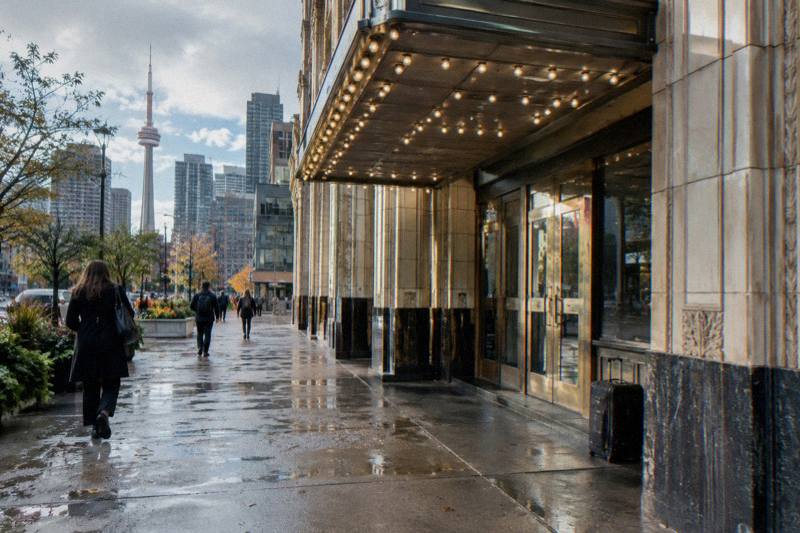
What To Wear On A Toronto Walking Tour: Shoes, Layers And Rain
Every free walking tour in Toronto runs between two and three hours on foot, so what you wear decides how the last hour feels. Here is how to match shoes, layers and rain gear to the walks themselves.
In Short
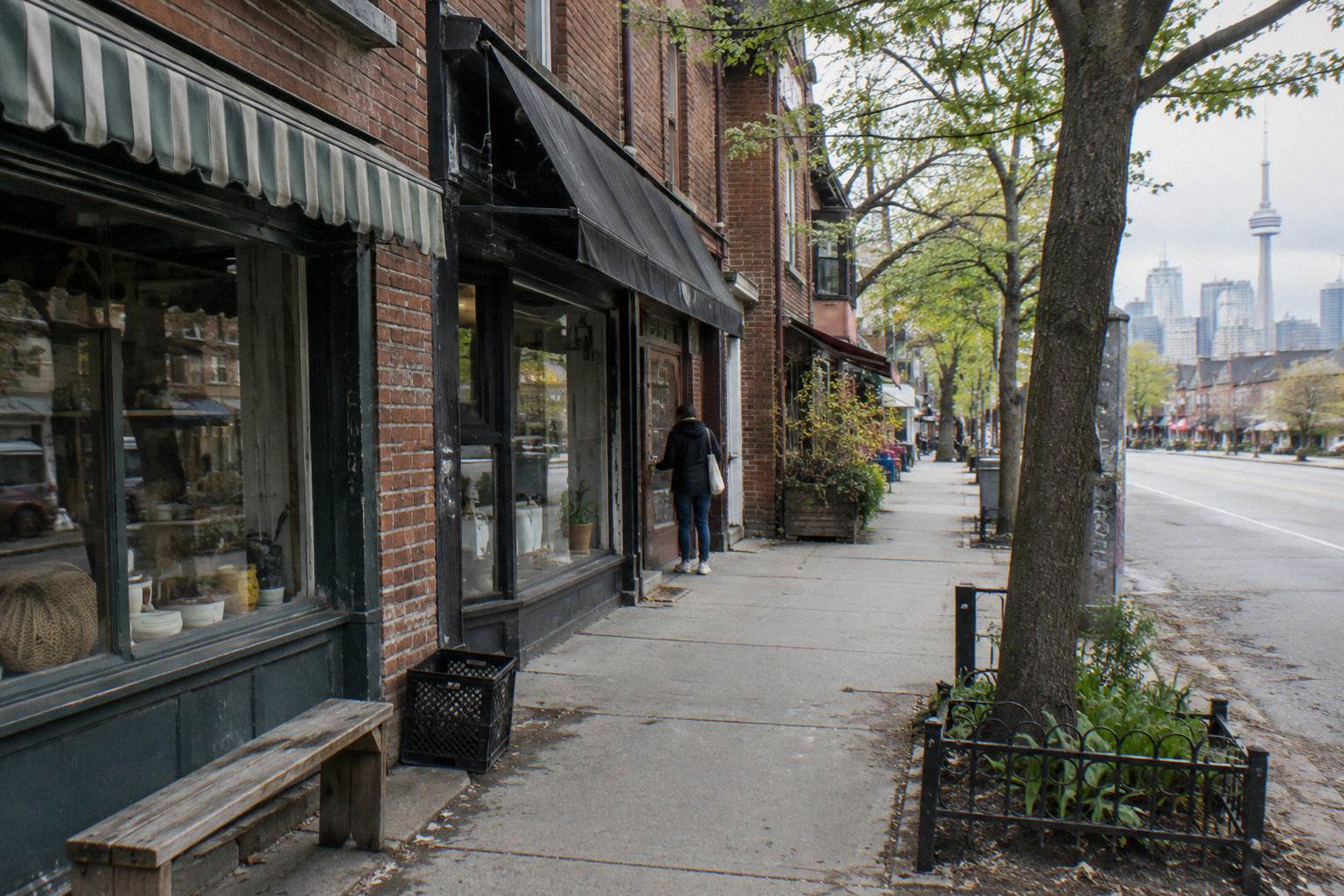
Wear broken-in walking shoes, dress in layers you can shed, and pack light rain gear. Toronto's free GuruWalk walks run two to three hours, and all but one start at a fixed downtown meeting point, so you carry everything the whole way. There is no dress code: guides run these walks for walkers in whatever is comfortable.
Part of the Free Things To Do In Toronto guides series, this one covers what to wear when the whole plan is walking.
Quick Facts
| Question | Answer |
|---|---|
| How long are the walks? | Every free walking tour on the roster runs 2 to 3 hours |
| Shortest walks | Like A Local, Hidden In Plain Sight, Graffiti Walls and Oldest Landmarks, all 2 hours |
| Longest walks | Old Town And PATH and the Multilingual 3-Hour Walk, both 3 hours |
| Is there a dress code? | No, none of the walks publishes one |
| Meeting points | Fixed downtown addresses, except Like A Local, whose guide sends the meeting points before the tour |
| Languages | Every walk runs in English; several add Spanish, one French and Portuguese, one Russian |
| Cost to join | Free, pay what you want, reserved on GuruWalk |
What Shoes Work For A Two-Hour Walk?
Any closed, broken-in walking shoe works for a two-hour walk, and the choice matters more than the brand. Every free walking tour on the Toronto roster runs between two and three hours on city sidewalks, so the shoe has to survive pavement, not trails. Sneakers, cushioned trainers or worn-in leather shoes all fit. What fails is anything new, thin-soled, or stiff, because a two-hour pavement walk punishes both within the first hour.
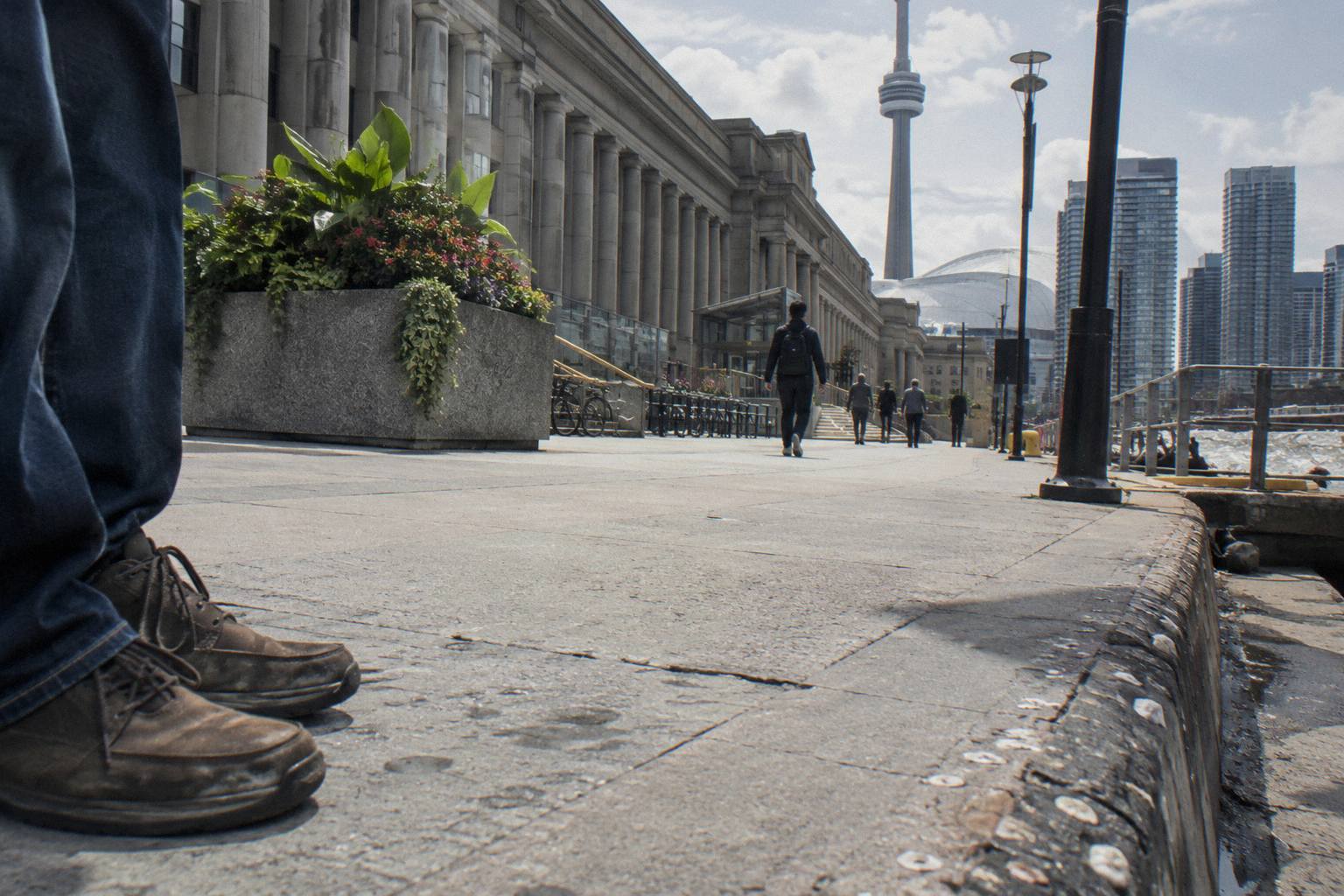
The durations are the honest place to start, because they are the one hard number in the whole clothing question. The shortest walks on the roster, at two hours flat, are the Like A Local walk run by Leo, the Hidden In Plain Sight public art walk run by Shaun, the Graffiti Walls walk run by Alex, and the Oldest Landmarks walk run by Zakarya. Two hours on flat downtown pavement is well inside the range of an ordinary pair of everyday sneakers, provided they have been worn enough to stop biting anywhere.
The middle band runs two and a half hours. The Downtown Toronto Walking Tour starting at Yonge St, run by Jose at 4.85 out of 5 across 885 GuruWalk reviews, sits here, as does his St Lawrence Market start walk and Dave's The Lost Rebellion walk through Old Town. Half an hour more does not change the shoe category, but it does change the cost of getting it wrong. A blister that would have been a nuisance at hour one becomes the whole story of hour two. If your shoes have any known friction point, deal with it before the walk, not during.
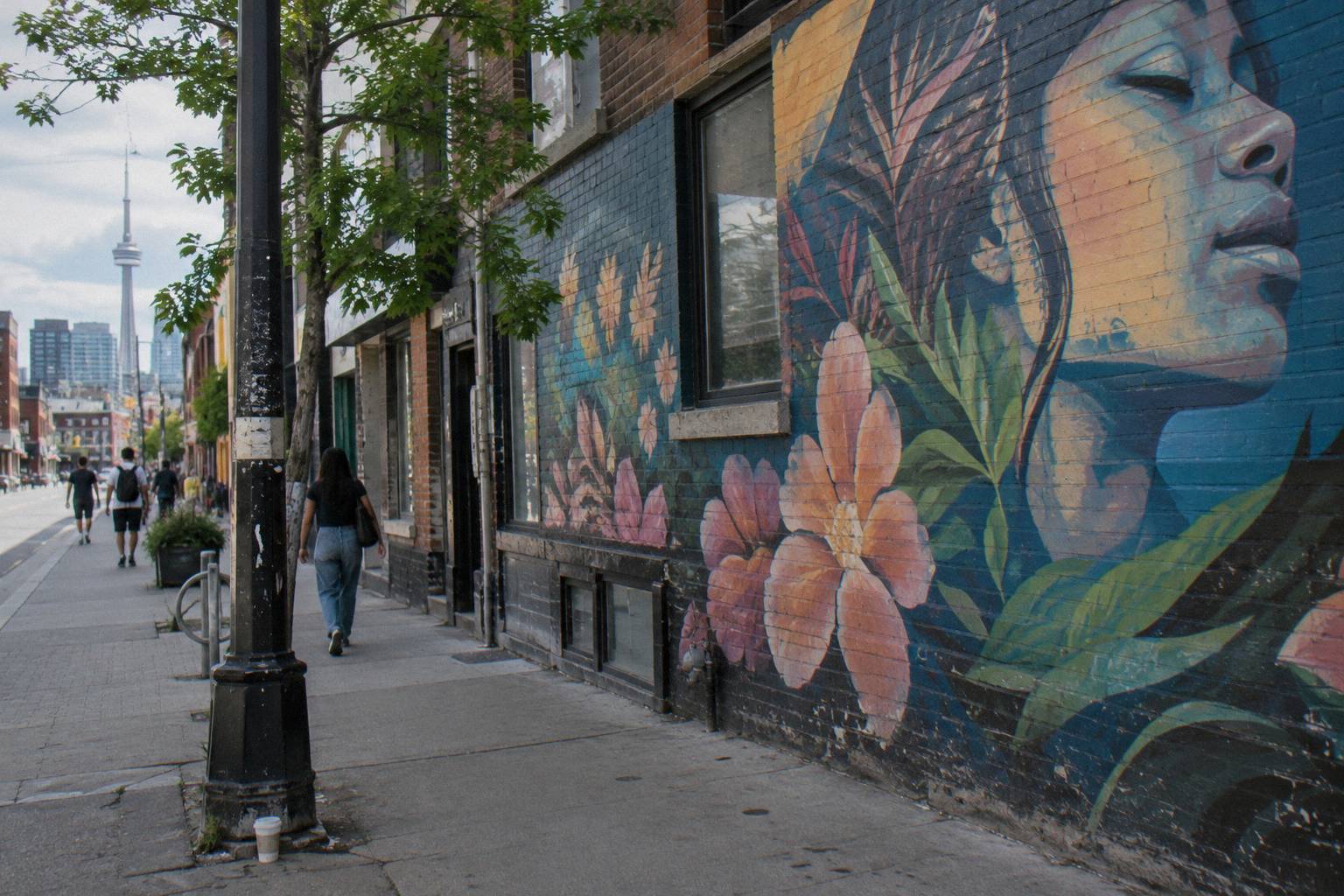
The longest walks, at three hours, are the Old Town And PATH walk from the Toonie Tours store on King Street East and the multilingual Bay Street walk from Brookfield Place. Three hours is a long time to stand in one spot listening, then step forward, then stand again, which is the actual rhythm of a guided walk rather than a steady march. Cushioning under the heel and a sole with some flex earn their place here. The sole also matters for the art walks: Shaun's Hidden In Plain Sight walk begins at the Monument to Multiculturalism outside Union Station, and Alex's Graffiti Walls walk meets at 298 Queen Street West, and both spend their two hours on pavement around public art rather than on grass.
| Walk | Duration | Rating on GuruWalk |
|---|---|---|
| Downtown Toronto Walking Tour starting at Yonge St | 2 hours 30 minutes | 4.85 out of 5, 885 reviews |
| St Lawrence Market Start, Bilingual | 2 hours 30 minutes | 4.79 out of 5, 204 reviews |
| The Lost Rebellion, English Only | 2 hours 30 minutes | 4.96 out of 5, 71 reviews |
| Like A Local, 2-Hour English Walk | 2 hours | 4.68 out of 5, 56 reviews |
| Old Town And PATH, 3 Hours | 3 hours | 4.64 out of 5, 249 reviews |
| Hidden In Plain Sight Public Art | 2 hours | 4.97 out of 5, 36 reviews |
| Graffiti Walls, English And Russian | 2 hours | 4.74 out of 5, 31 reviews |
One practical note on socks, since it follows from the durations above rather than from any local secret. A three-hour walk in the same socks is enough time for moisture and friction to combine, and a fresh pair of thicker walking socks is the cheapest upgrade available to the whole outfit. Rotate the laces tight enough that the foot does not slide forward on the downhill moments, loose enough that you can still feel your toes. If you are visiting and only brought one pair of shoes, wear them on the travel days before the walk so they are warmed up rather than boxed-new.
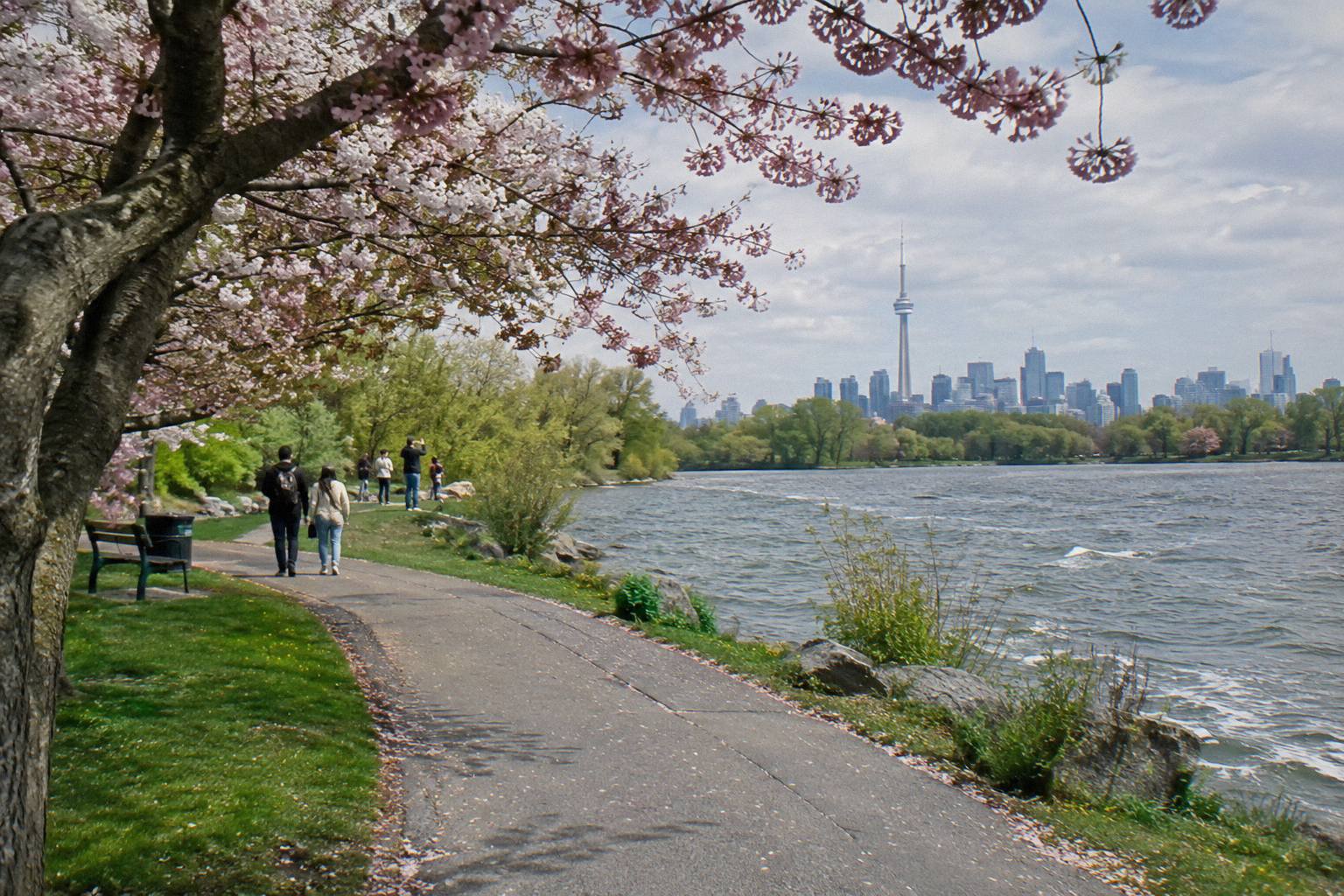
Rain changes the shoe question only slightly. A Toronto walking tour in rain is still a pavement walk, so the danger is smooth leather soles on wet stone, not mud. A rubber-soled sneaker with any tread at all handles wet sidewalks. Reserve real worry for the painted and polished surfaces around the public art stops, which can be slick, and for the painted walls themselves on the art walks, where standing water gathers at kerbs. Nothing on any of these walks requires boots.
If you want a fuller picture of how these walks compare before you commit an afternoon to one, the how long a free walking tour in Toronto runs post breaks the durations out in more detail.
How Do You Layer For Toronto Weather?
Layer in three pieces: a base you could walk in alone, a warm middle layer that packs small, and a shell that stops wind and rain. The reason is the format, not the forecast: these walks run two to three hours at a guide's pace, with standing time at every stop, so you warm up while moving and cool off while listening. Layers let you match both halves of that cycle instead of dressing for only one of them.
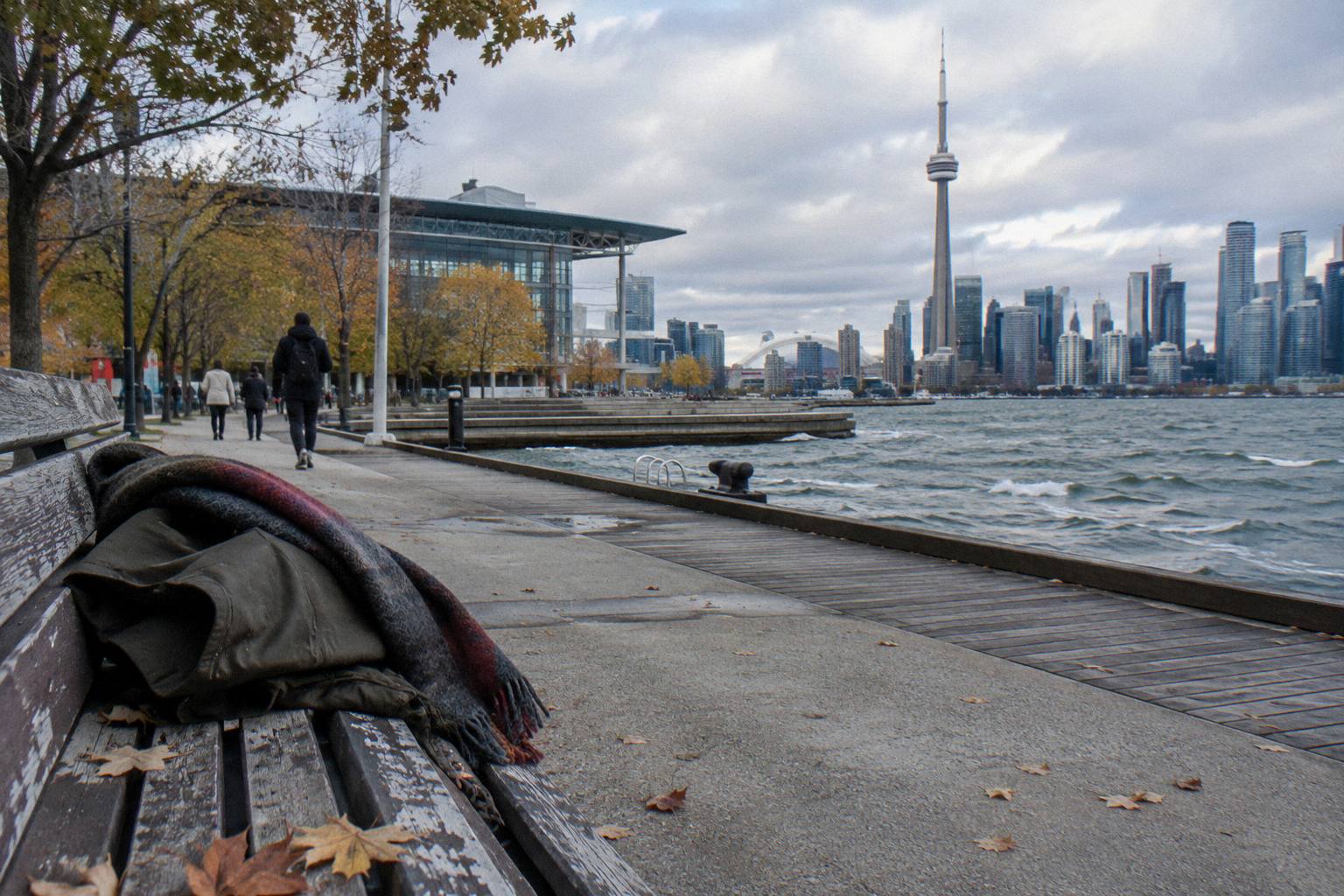
The standing-versus-moving rhythm is the thing most first-time walkers misjudge. A two-hour walk is not a two-hour hike. You stop, you hear about a wall or a market or a monument, you start again. A single heavy coat that felt right at the meeting point becomes a weight to carry by the second hour, while a light jacket that felt fine at a brisk pace leaves you cold through a long stop. Three thin layers solve both problems because each one is small enough to tie around a waist or stuff in a bag.
Think in terms of the pieces rather than in temperatures. The base is whatever shirt you would happily walk in. The middle layer is a fleece, a knit or a light sweater, chosen so it still fits under the shell. The shell is the one item worth choosing carefully: it should stop wind and rain, because Toronto's free walks meet at exposed downtown points like College Park, the corner of Front and Bay outside Union Station, and the South Market on Front Street East, and the route between stops is open street rather than sheltered arcade. The PATH walk is the exception on paper, since its title includes the PATH, but it still meets and finishes at street level.
Rain deserves its own paragraph because it is the most common reason people arrive dressed wrong. A hood beats an umbrella on a guided walk: your hands stay free, you do not block the person behind you at a stop, and wind that turns an umbrella inside out turns a hood into a hat. Rain trousers are overkill for a city walk; quick-drying trousers or jeans you do not mind dampening for an hour are the practical choice. The shell also does double duty on dry days as the wind layer, so it is the one garment that belongs in the bag regardless of the sky at the meeting point.
For walkers planning around the colder months, the free winter walks in Toronto guide covers the indoor and sheltered routes, and the best month and time of day for a Toronto walking tour guide covers the seasonal question in full. The short version for clothing: add a hat and gloves to the same three-layer system and you have covered the cold end of the calendar without changing the structure.
| Layer | What it is | Why it earns its place |
|---|---|---|
| Base | A shirt you could walk in alone | Handles the warm stretches while moving |
| Middle | Fleece, knit or light sweater | Covers the long standing stops, packs small when shed |
| Shell | Wind and rain jacket with a hood | Blocks wind and rain with hands free |
| Extras | Hat, gloves | Extend the same system into cold months |
One last layering point that comes from the walks themselves rather than from any weather desk: choose things you can take off without stopping the group. A pullover you have to wrestle over your head while the guide is talking costs you a stop. A zip-up middle layer and a front-zipping shell let you adjust in a few seconds at a kerb and rejoin the conversation. That is the whole craft of dressing for a guided walk, and it costs nothing to get right.
What Should You Carry?
Carry as little as the walk allows: a small bag with water, your phone, a power source if you photograph, and your shell if you are not wearing it. Every walk on the roster is a point-to-point city walk with no luggage storage, so whatever you bring stays on your body for the full two to three hours. The single heaviest item on most visitors is an oversized day bag that never gets opened.
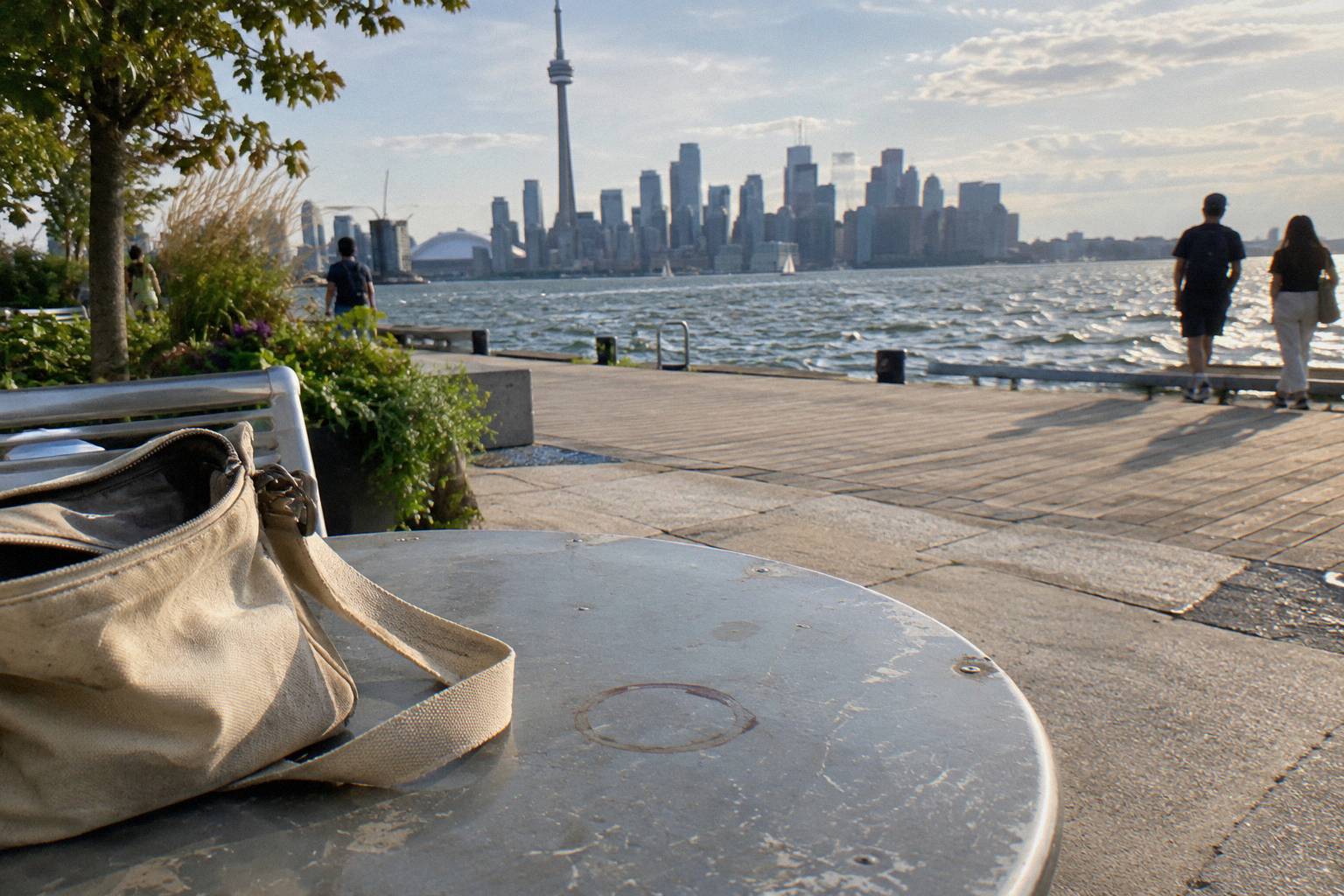
The meeting-point list is the practical test of this. Most walks start at precise downtown addresses: College Park at 33 College Street, the Toonie Tours store at 37 King Street East, the South Market on Front Street East, the North Market at 92 Front Street East, Brookfield Place on Bay Street, the Monument to Multiculturalism outside Union Station, 298 Queen Street West, Little Trinity Church at 417 King Street East, and Toronto City Hall on Queen Street West. None of these is a trailhead with a locker. You arrive carrying everything, you walk carrying everything, and you finish, still carrying everything, somewhere else downtown. The wider set of guides lives on Free Things To Do In Toronto.
The Like A Local walk is the one exception on meeting arrangements, and it affects packing in a small way: the guide sends the meeting points to walkers before the tour rather than publishing an address, so your phone is the one item you genuinely need on you, both for that message and for the booking itself on GuruWalk. A charged phone with the booking confirmation handy is worth more than any other item in the bag. Everything else on the list is comfort rather than necessity.
| Item | Why | Needed on every walk? |
|---|---|---|
| Phone with the booking | Meeting point, timing, the GuruWalk page | Yes |
| Water | Two to three hours of walking | Yes |
| Shell or rain layer | The one garment that covers wind and rain | Yes, in the bag or worn |
| Small snack | Longest walks run 3 hours | Optional |
| Camera or spare battery | Public art walks stop often for photos | Optional |
Footwear spares and sock spares earn a mention again here because they live in the bag rather than on the body. A folded spare pair of socks is smaller than a paperback and has saved more two-hour walks than any other single item. A plaster or two takes almost no space. Neither belongs in a big bag, which is the point: everything on this list fits in a small backpack or a decent-sized crossbody, and the bag you can forget you are wearing is the right bag for a walk that ends three hours and a few neighbourhoods from where it started.
Rain rounds out the carry list. If rain is possible, the shell comes off the maybe-list and becomes mandatory, and a small dry pocket for the phone matters more than anything else, because the phone carries both your meeting instructions and your way home. A plastic sleeve or a zip pocket is enough. Umbrellas are the one common item worth leaving behind, for the reasons above: hoods keep hands free, and a group of walkers with umbrellas stops being able to see the guide or the art.
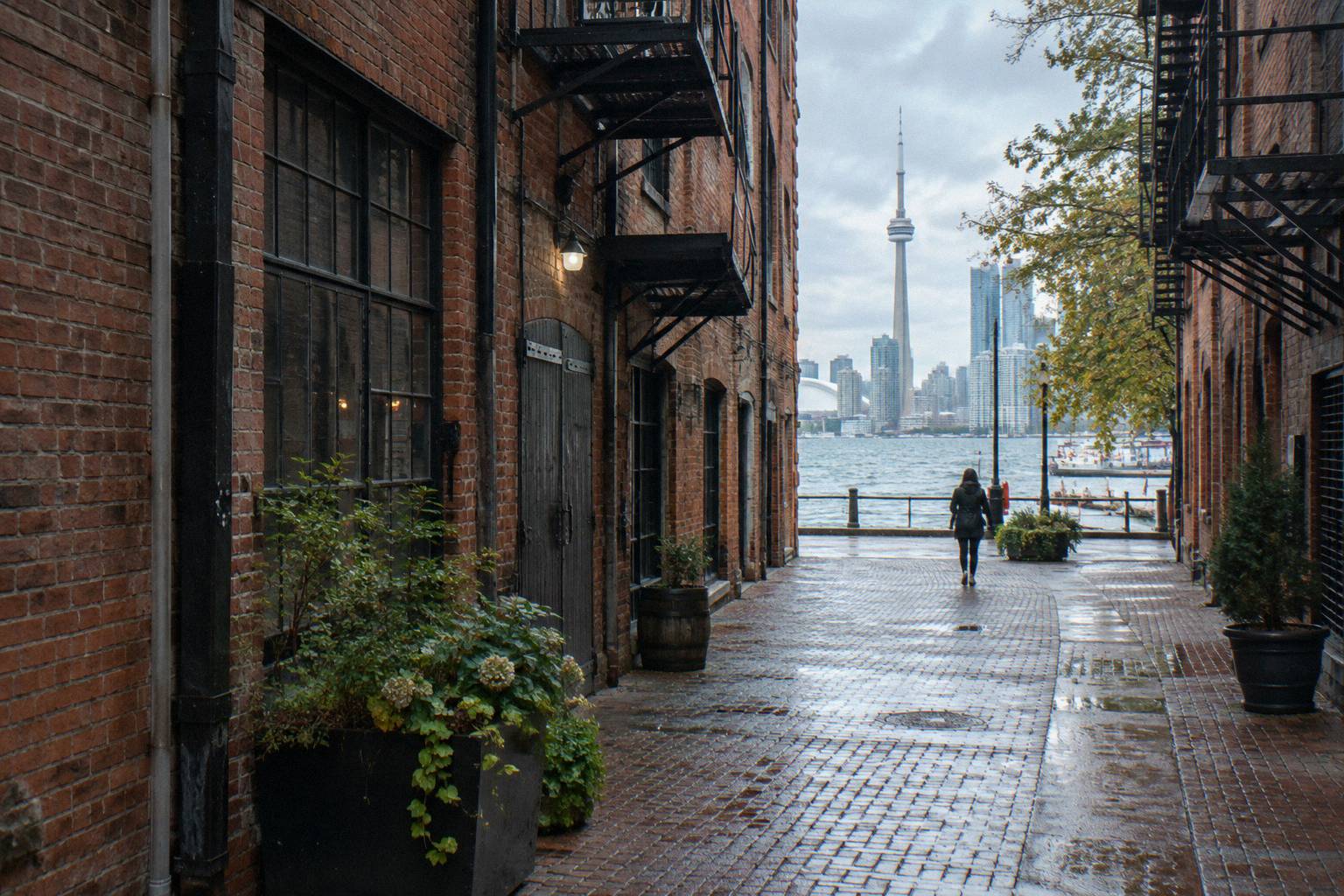
With the bag settled, the walks themselves are the next decision, and the trio below spans the full spread of durations, meeting points and languages on the roster.
Which Free Walking Tours Cover This?
All 10 free GuruWalk tours in Toronto fit this advice: they fall under three themes, Downtown Highlights, Old Town History, and Street and Public Art, and each lasts two to three hours on pavement. Six meet in Old Town and St Lawrence, one starts at College Park on Yonge Street, and the art walks begin near Union Station, Queen Street West, and City Hall, with every tour in English and five offering a second language or more.
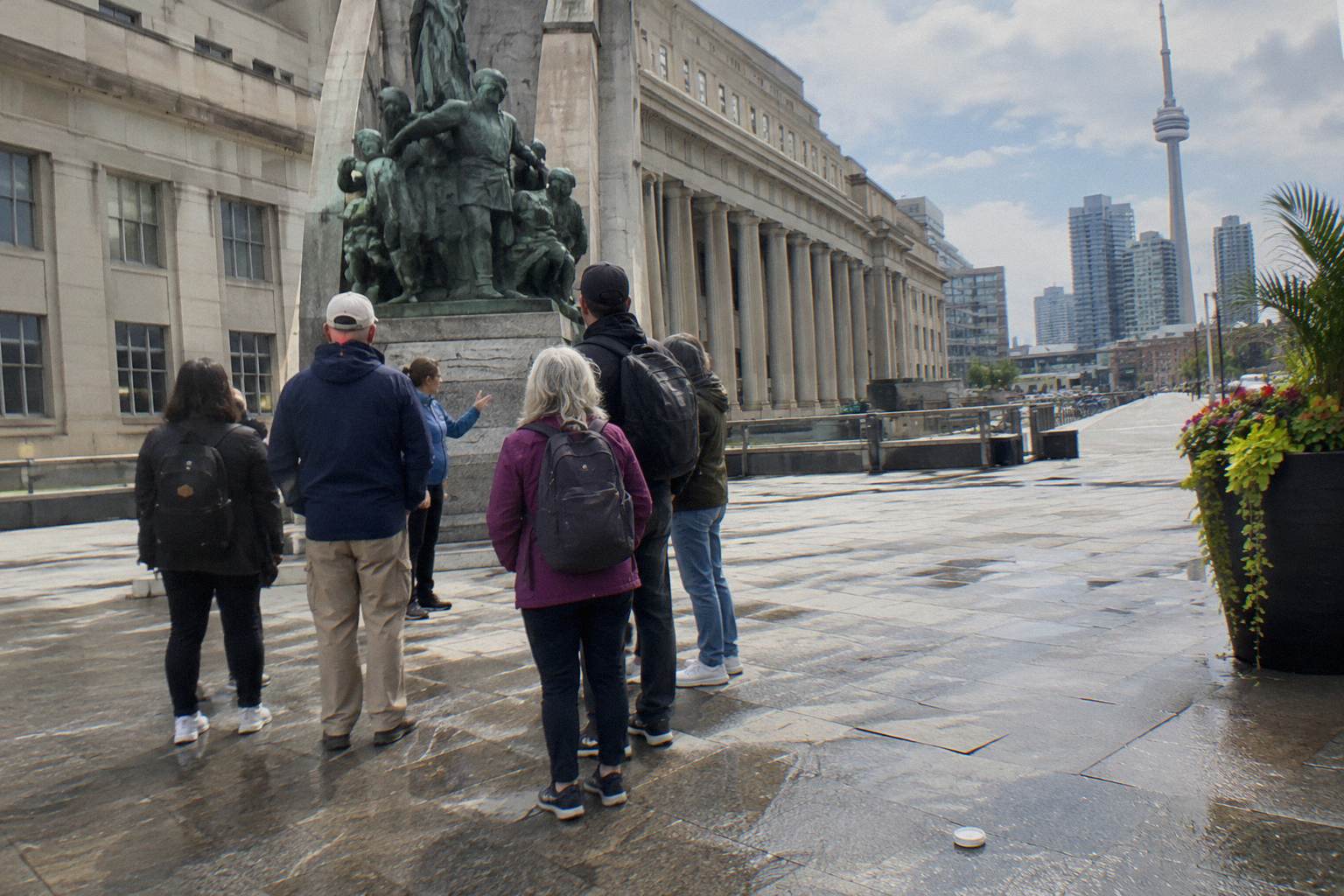
The Downtown Highlights walks are the natural fit for a first outfit test, because they are the walks with the largest review pools and the most predictable format. Jose's Downtown Toronto Walking Tour starting at Yonge St meets at College Park, 33 College Street, runs 2 hours 30 minutes in English and Spanish, and carries 4.85 out of 5 across 885 GuruWalk reviews, the largest pool of any walk on the roster. His St Lawrence Market start walk covers the same 2 hours 30 minutes from the South Market on Front Street East, at 4.79 out of 5 across 204 reviews, also in English and Spanish. Leo's Like A Local walk, 2 hours in English at 4.68 out of 5 across 56 reviews, is the one with the meeting points sent ahead rather than a fixed corner.
The Old Town History walks cluster around St Lawrence and King Street East, and they are where the three-hour end of the roster lives. The Old Town And PATH walk, run by Toonie from the Toonie Tours store at 37 King Street East, runs 3 hours in English and Spanish at 4.64 out of 5 across 249 reviews. Dave's The Lost Rebellion walk, English only, starts at the North Market at 92 Front Street East, runs 2 hours 30 minutes, and scores 4.96 out of 5 across 71 reviews. The Oldest Landmarks walk meets at Little Trinity Church, 417 King Street East, and runs 2 hours in English with 4 reviews, no score yet on GuruWalk.
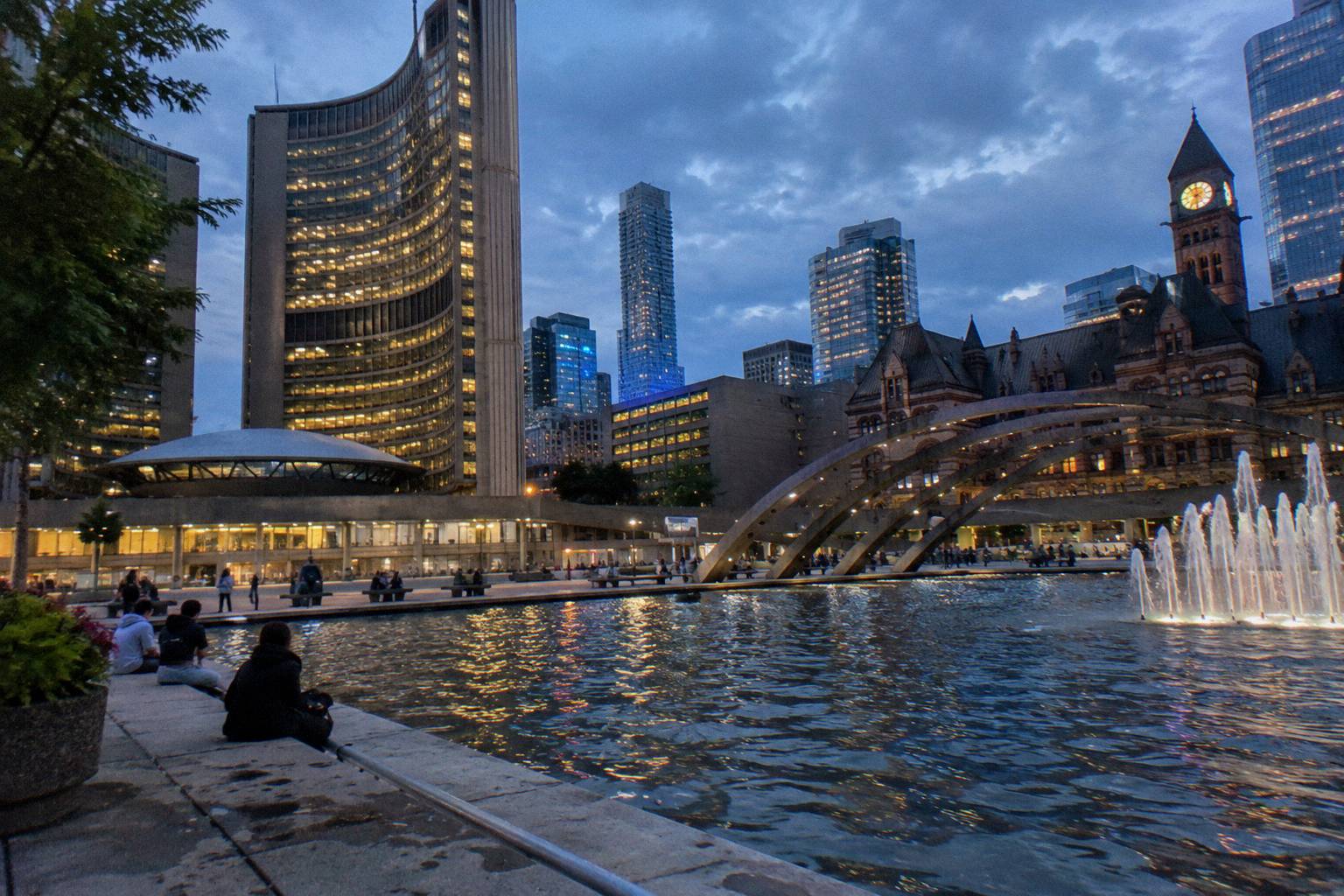
The Street And Public Art walks are the ones where the outfit earns its keep in small ways, because public art stops mean standing still and looking up. Shaun's Hidden In Plain Sight walk, 4.97 out of 5 across 36 reviews, the highest rating on the roster, meets at the Monument to Multiculturalism outside Union Station on Front Street West and runs 2 hours in English. Alex's Graffiti Walls walk meets at 298 Queen Street West, runs 2 hours in English and Russian, at 4.74 out of 5 across 31 reviews. The Art After Dark night walk meets at Toronto City Hall on Queen Street West, 2 hours in English, 2 reviews, no score yet.
| Walk | Meets at | Language |
|---|---|---|
| Downtown Toronto Walking Tour starting at Yonge St | College Park, 33 College Street | English and Spanish |
| St Lawrence Market Start, Bilingual | St Lawrence Market South Market, Front Street East | English and Spanish |
| Old Town And PATH, 3 Hours | Toonie Tours store, 37 King Street East | English and Spanish |
| The Lost Rebellion, English Only | St Lawrence North Market, 92 Front Street East | English |
| Like A Local, 2-Hour English Walk | Meeting points sent by the guide before the tour | English |
| Multilingual 3-Hour Walk | Brookfield Place, Bay Street | English, Spanish, French and Portuguese |
| Hidden In Plain Sight Public Art | Monument to Multiculturalism, outside Union Station | English |
| Graffiti Walls, English And Russian | 298 Queen Street West | English and Russian |
Back to Yonge Street for a moment, because the meeting point there shapes the clothing call in one specific way. College Park sits on Yonge Street at College, and the walk that starts there runs 2 hours 30 minutes through the downtown core in English or Spanish. Dress for it exactly as this guide describes: broken-in shoes, three layers, a small bag, and a shell you can shed and stuff away when the sun comes out between stops.
For a deeper comparison of formats before you choose, the free versus paid walking tours in Toronto guide lays out the honest differences, and how tip-based free walking tours work explains the model in plain terms. Every walk named above is free to join, pay what you want, and reserved on GuruWalk.
Mistakes That Trip People Up On A Toronto Walking Tour
The mistakes that trip people up are dressing for the meeting point instead of the whole walk, carrying a bag sized for a hike, and wearing shoes that have never been worn; all three stem from treating a free walking tour like a casual stroll when it is really a two- to three-hour pavement walk with standing stops, and every fix is small and decided at home the night before.
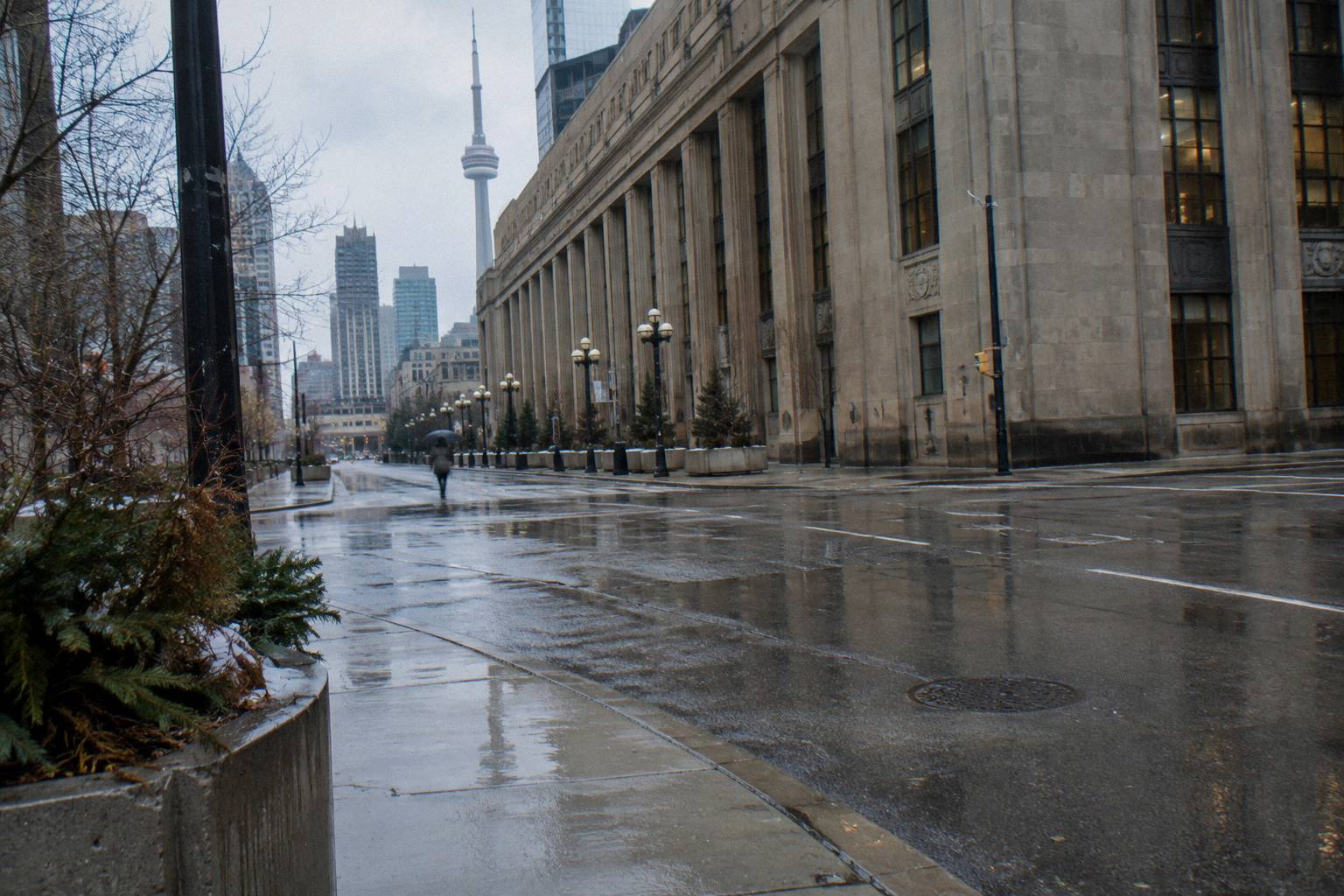
The first mistake is the single-layer mistake. Someone dresses warmly because the morning is cold, then spends the moving stretches overheating with no way to cool down except unzipping everything. The same person next week dresses lightly because the afternoon is mild, then freezes through the standing stops. Both failures have the same fix, the three-layer system above, and both are most common on the 3-hour walks, the Old Town And PATH walk and the Bay Street multilingual walk, where the cycle of warming and cooling repeats most often.
The second mistake is treating a ticketed sight beside the route as part of a free day and dressing for indoors all day. This is worth one careful paragraph because it is the trap this site exists to flag. The walks themselves cost nothing: free to join, booked on GuruWalk. But downtown Toronto also holds conditionally free and fully ticketed places, and a walker who plans a museum free evening around a walk needs different clothing for each half of that day. The ROM's free window is the third Tuesday of the month, 4:00 to 8:30pm; the AGO's is the first Wednesday, 6 to 9pm, with a free General Admission ticket booked ahead; the Aga Khan Museum is free every Wednesday, 4 to 8pm; the Gardiner is free Wednesdays after 4pm; the Bata Shoe Museum is free all day Sundays, 12pm to 5pm; and MOCA's first-full-weekend Fridays run 5 to 9pm with Floor 1 always free. The free museums in Toronto guide carries the full breakdown. Indoor evenings want one extra layer to check at no coat check, which is a clothing argument for the packable middle layer yet again.
The third mistake is new shoes on a long walk, covered above but worth naming as a mistake because it is the most common one on the review pages of every walking-tour city. The fourth is the umbrella, which fails on a guided walk for reasons of group dynamics as much as weather. The fifth is forgetting that the Like A Local walk sends its meeting points ahead, and arriving with a dead phone and no way to read them.
| Mistake | What happens | The fix |
|---|---|---|
| New or stiff shoes | Blisters by the second hour | Wear the shoes in before the walk |
| One heavy layer | Overheat moving, chill standing | Three thin layers |
| Umbrella | Blocked views, busy hands | Hooded shell |
| Oversized day bag | Carried unused for 3 hours | Small bag, short list |
| Dead phone | No meeting instructions for Like A Local | Charge overnight, spare battery |
A closing note on what not to overthink. There is no dress code on any of these walks, and nobody is turned away for their outfit. The guides on the roster run walks in English, Spanish, French, Portuguese and Russian between them, for walkers of every description, and the clothing advice in this guide is about comfort across two to three hours on pavement, nothing more. If the shoes are broken in and the shell is in the bag, the rest of the outfit is genuinely optional.
Common Questions
What Shoes Should I Wear On A Toronto Walking Tour?
Broken-in closed walking shoes with cushioning and some tread. Every walk on the roster runs 2 to 3 hours on downtown pavement, from College Park to St Lawrence Market to Queen Street West, so trail gear is unnecessary and thin leather soles are the real hazard, especially on wet polished surfaces around the public art stops.
How Many Layers Do I Need For A Free Walking Tour?
Three: a base you can walk in alone, a packable middle layer for the standing stops, and a hooded shell for wind and rain. The rhythm of a guided walk alternates warming up while moving and cooling off while listening, and layers are the only outfit that matches both halves of that cycle across a full two to three hours.
Should I Bring An Umbrella On A Walking Tour?
A hood is better than an umbrella on a guided walk. Hoods keep your hands free, do not block the walkers behind you at stops, and survive wind that turns an umbrella inside out. If rain is possible, the shell goes in the bag regardless of the sky at the meeting point, and a dry pocket for your phone matters more than anything else.
What Should I Carry In My Bag?
Keep it small: your phone with the booking and meeting details, water, and your shell if you are not wearing it. There is no storage at any meeting point, from the Toonie Tours store to the Monument to Multiculturalism, so whatever you bring stays on you for the whole walk. A spare pair of socks is the most useful optional item.
Is There A Dress Code On Toronto's Free Walking Tours?
No. None of the walks publishes a dress code. Every walk is free to join, reserved on GuruWalk, and run by an independent local guide for walkers in whatever is comfortable. The advice in this guide is purely about comfort across two to three hours on city sidewalks, not about any requirement.
Do The Longer Walks Need Different Clothing?
Slightly, yes. The 3-hour walks, the Old Town And PATH walk and the multilingual Bay Street walk, repeat the warm-and-cool cycle more often, so the middle layer and the shell earn their place more firmly. The 2-hour walks are forgiving enough that a good pair of shoes and a jacket in the bag cover almost everything.